Data Governance Platform
Catalogue a real database, have a steward say what matters, and publish the record into Architecture Governance Platform.
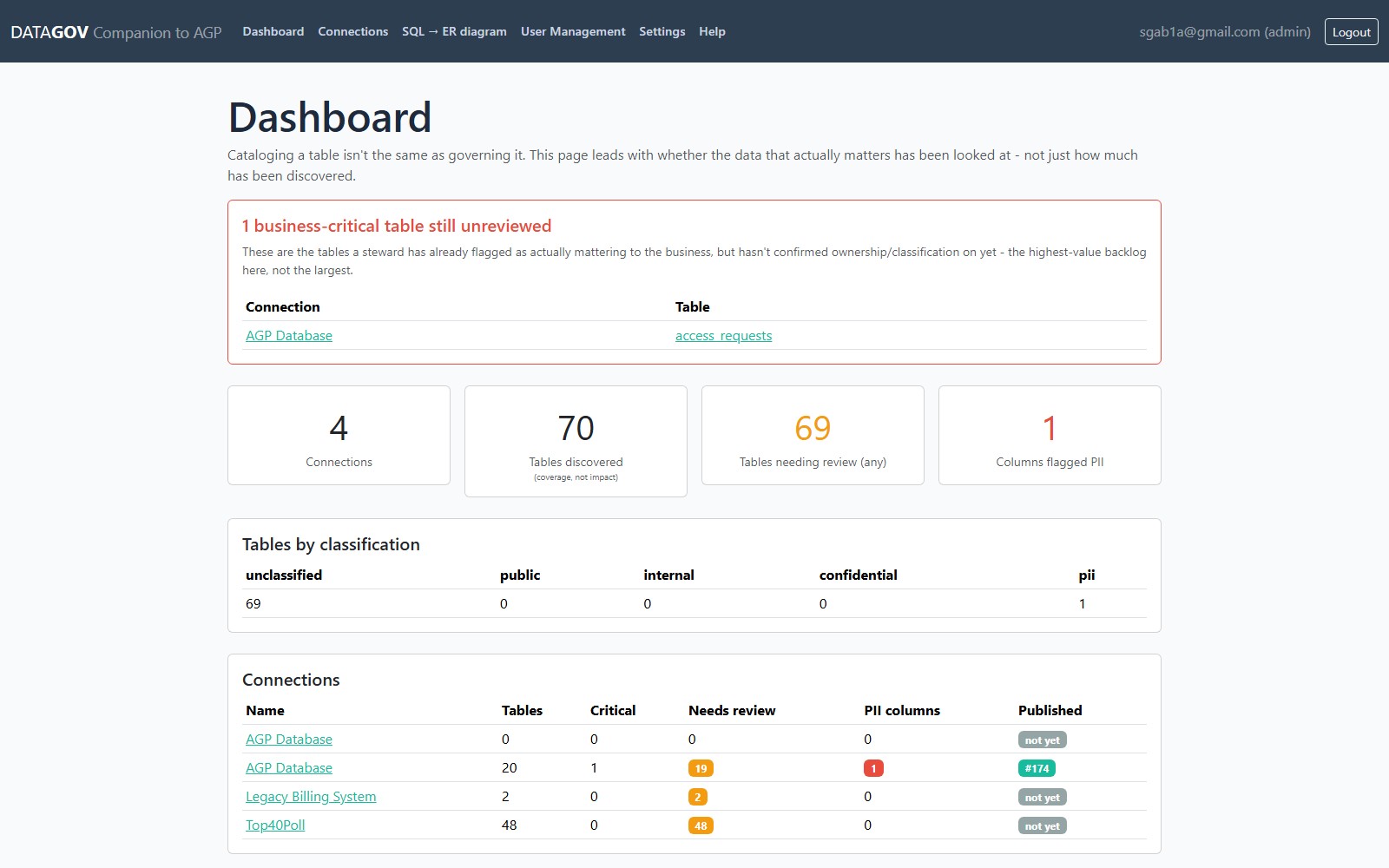
A catalogue on its own isn’t governance. Documenting thousands of tables nobody needs doesn’t make the handful that matter any safer, or any better understood. This is the companion to Architecture Governance Platform built for that gap: connect to a real database, see what’s actually there, and get a steward to say what matters before any of it goes on record.
Scanning a connection reads table and column names and data types only, never a row of real data. A pasted SQL export works the same way for a system with no live access at all. Either way, nothing is guessed: a table starts unclassified and unreviewed, and stays that way until a steward sets its owner, its sensitivity, and whether it’s something the business actually depends on. That last judgement is kept separate from the rest, on purpose, so a table can be flagged business-critical the moment it’s found, well before anyone has done the full review - and so the one dashboard that matters can lead with what’s critical and still waiting, not a bare count of how much has been discovered.
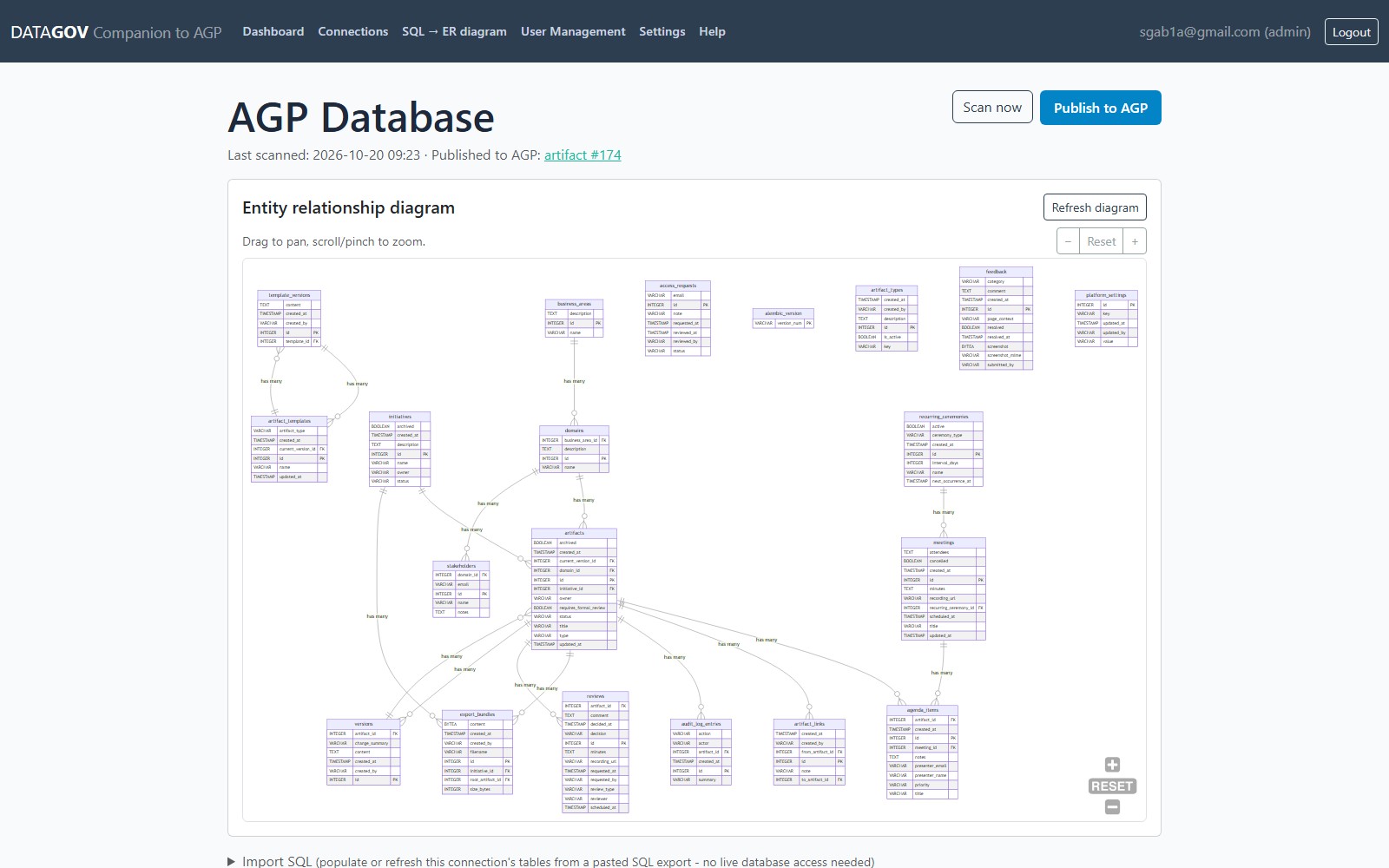
Once a steward is happy with what’s there, publishing sends a record into Architecture Governance Platform: the tables, their classification, and an entity-relationship diagram built straight from the catalogue itself, cross-linked and versioned the same way as everything else on that platform.
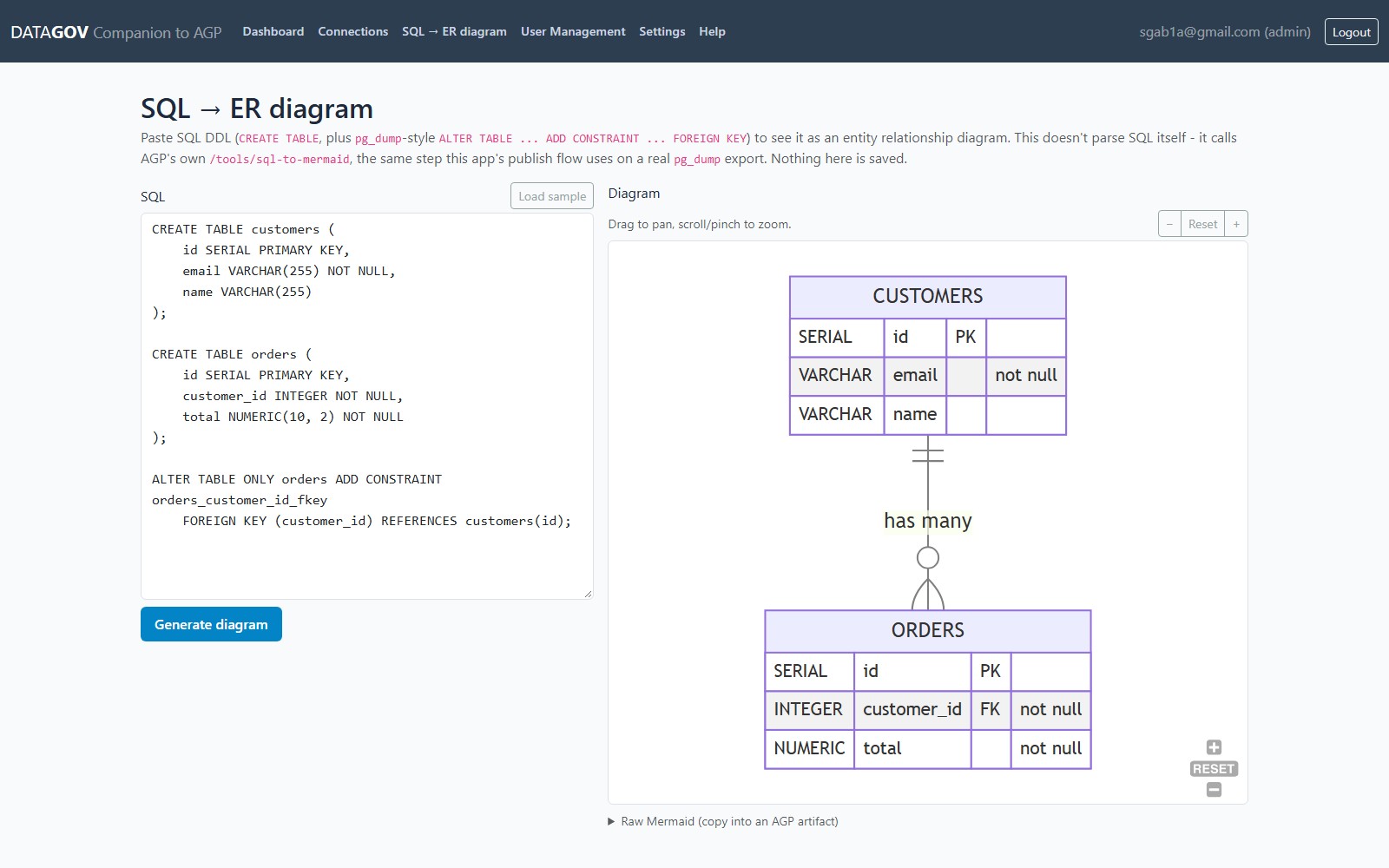
No database required to try it. Paste any SQL schema and get the same entity-relationship diagram straight away, with the same zoom and pan - useful on its own, and a preview of what scanning a real connection produces.